

How Do Timing Belts Improve the Efficiency of Industrial Power Transmission?
2026-11-04
Timing Belts are essential components in modern mechanical transmission systems, providing accurate synchronization and reliable power transfer between rotating shafts. Widely used in automotive engines, industrial machinery, packaging equipment, and automated production lines, they help maintain consistent motion while reducing noise and minimizing maintenance requirements. Compared with traditional chain or friction belt drives, Timing Belts offer precise timing, stable performance, and efficient operation. Choosing the right timing belt is therefore important for improving equipment productivity, extending service life, and reducing operating costs. Zhejiang Sanxing Rubber Co., Ltd. provides rubber belt solutions designed to meet different industrial transmission requirements.
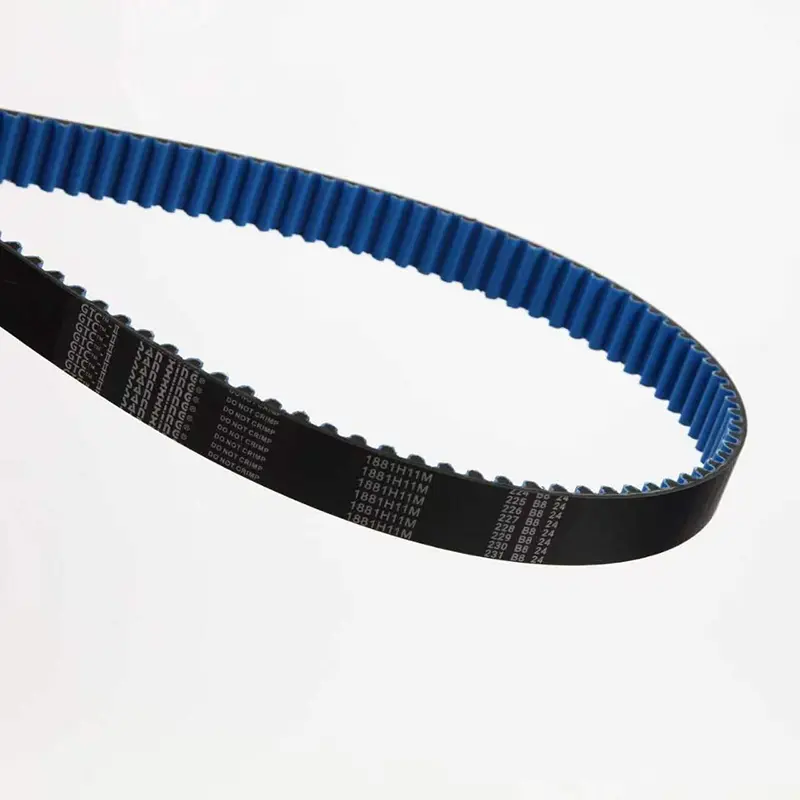
1. What Are Timing Belts and How Do They Work?
Timing Belts are toothed transmission belts designed to engage with matching toothed pulleys. Unlike ordinary V-belts, which rely mainly on friction, timing belts transmit power through the positive engagement of their teeth.
This design prevents slipping and ensures that the driving and driven shafts maintain a consistent rotational relationship. As a result, Timing Belts are particularly suitable for applications where accurate positioning and synchronized movement are essential.
Key Components of a Timing Belt:
-
Belt Body: Usually made from rubber or polyurethane, providing flexibility and wear resistance.
-
Reinforcement Cords: Commonly made from fiberglass, steel, or other high-strength materials to improve tensile strength and dimensional stability.
-
Toothed Surface: Designed to engage with pulley grooves and maintain accurate transmission.
-
Protective Covering: Helps reduce friction, protect the belt surface, and improve resistance to environmental conditions.
2. Why Are Timing Belts Important in Industrial Applications?
The performance of a transmission system directly affects machine efficiency, production accuracy, and operating costs. High-quality Timing Belts provide several important advantages.
Accurate and Synchronized Transmission
The toothed structure maintains a stable transmission ratio between connected shafts. This is especially important for automated equipment, CNC machinery, and packaging systems that require precise movement and positioning.
Reduced Noise and Vibration
Compared with many traditional chain transmission systems, properly selected Timing Belts can operate with lower noise and vibration. This contributes to a more comfortable working environment and smoother machine performance.
Improved Energy Efficiency
Timing Belts reduce energy losses associated with slippage because their teeth engage directly with the pulley. This helps maintain efficient power transmission and supports consistent equipment operation.
Lower Maintenance Requirements
Timing belt systems generally do not require regular lubrication. With correct installation, tension adjustment, and routine inspection, they can help reduce maintenance work and equipment downtime.
3. Which Applications Benefit Most from Timing Belts?
Timing Belts are widely used across industries because of their accuracy, flexibility, and reliable transmission performance.
| Industry | Typical Applications | Main Benefits |
|---|---|---|
| Automotive | Engine timing systems | Accurate valve synchronization |
| Packaging | Filling and sealing machines | Consistent movement |
| Textile | Spinning and weaving equipment | Stable power transmission |
| Printing | Printing and paper-feeding machines | Precise positioning |
| Automation | Robotics and conveyor systems | Synchronized operation |
| Industrial Machinery | CNC machines and production equipment | Reliable mechanical transmission |
Different applications require different belt specifications. Factors such as operating speed, transmitted torque, temperature, installation space, and environmental conditions should be considered before selecting a suitable product.
4. How to Choose the Right Timing Belts?
Selecting appropriate Timing Belts can significantly influence transmission efficiency and equipment service life. Buyers and equipment manufacturers should evaluate the following factors:
-
Tooth Profile: Select a compatible tooth profile, such as trapezoidal or curvilinear, according to transmission requirements.
-
Belt Material: Choose rubber or polyurethane based on operating conditions and application demands.
-
Belt Dimensions: Confirm pitch, width, length, and tooth count to ensure compatibility with the pulley system.
-
Load and Speed: Consider the required torque, rotational speed, and working frequency.
-
Operating Environment: Evaluate temperature, humidity, oil exposure, dust, and other environmental factors.
-
Product Quality: Check dimensional accuracy, tensile strength, wear resistance, and manufacturing consistency.
Choosing an unsuitable belt may cause premature wear, excessive noise, inaccurate transmission, or unexpected equipment downtime. Professional product selection helps avoid these problems.
5. What Makes a Reliable Timing Belt Manufacturer?
For industrial buyers, selecting a dependable manufacturer is just as important as choosing the correct belt specifications. Consistent product quality and technical support can make a significant difference in long-term purchasing decisions.
Zhejiang Sanxing Rubber Co., Ltd. focuses on rubber belt manufacturing and provides solutions for different transmission applications. When evaluating a timing belt supplier, buyers should pay attention to:
-
Manufacturing Experience: Industry experience and production capabilities.
-
Quality Control: Consistent inspection of materials, dimensions, and finished products.
-
Product Selection: Multiple specifications to accommodate different machinery and operating conditions.
-
Customization Support: The ability to provide suitable belt solutions according to equipment requirements.
-
Customer Service: Professional communication and assistance with product selection.
Working with an experienced supplier helps businesses improve procurement efficiency and establish a more stable supply chain.
Conclusion
Timing Belts play an important role in modern industrial transmission by delivering accurate synchronization, efficient power transfer, reduced noise, and dependable performance. From automotive engines to automated production lines, selecting the right belt can improve equipment efficiency and reduce long-term maintenance costs.
Zhejiang Sanxing Rubber Co., Ltd. is committed to providing rubber belt products for diverse industrial applications. Whether you are looking for standard Timing Belts or suitable solutions for specific machinery, choosing a reliable manufacturing partner is an important step toward achieving stable and efficient operations.
Looking for reliable Timing Belts for your industrial equipment? Contact us today to discuss your application requirements and explore suitable rubber belt solutions from Zhejiang Sanxing Rubber Co., Ltd.