

Top Conveyor Belt Production Line Solutions to Streamline Your Operations
2026-10-04
Every minute your conveyor line hesitates, your output quietly bleeds. At SFC, we engineer belt production systems that don't just move material—they eliminate hidden downtime, reduce manual touchpoints, and turn your current workflow into a smoother, faster operation. Before diving into the top solutions reshaping modern facilities, ask yourself one question: how many hours did you lose last quarter to belt misalignment, slow changeovers, or premature wear? If the answer stings, you're in the right place.
Rethinking Line Layout for Fewer Bottlenecks
Traditional line layouts often lock workstations into a straight sequence, so any speed mismatch between adjacent steps creates waiting and pile-ups. Rethinking that arrangement starts with questioning the assumption that material must travel in one direction. Shifting to a U-shaped or cellular layout lets operators handle multiple steps and pass work back and forth, which smooths out uneven cycle times.
Another angle is to look at where parts and people actually cross paths. When high-frequency movements overlap, congestion builds up even if individual machines run fast. Rearranging equipment so that tightly linked operations sit next to each other cuts transport time and frees up aisle space. Sometimes moving a single workstation a few meters removes a recurring jam that used to stall the whole line.
This kind of redesign works best when it is treated as an ongoing experiment rather than a one-time project. Collecting simple time measurements at each handoff reveals where flow hesitates, and testing small layout changes on a temporary basis shows what actually reduces those delays. Over time, the line becomes less about pushing units through a fixed path and more about keeping movement balanced and uninterrupted.
Modular Belting That Adapts as Your Product Mix Shifts
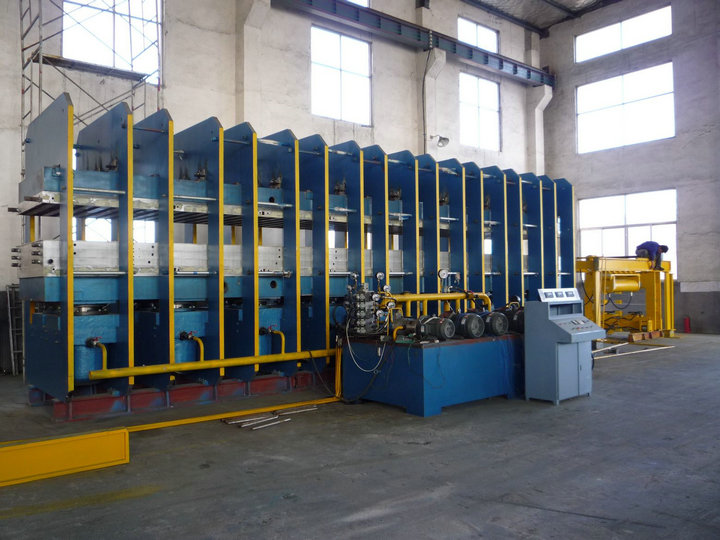
When your production line shifts from running lightweight cartons to heavy totes, the last thing you want is to swap out an entire conveyor belt. Modular belting is built from interlocking plastic segments, so you can replace just the worn or damaged modules instead of the whole system. That means less downtime when product dimensions change and no need to stock multiple belt types for different runs.
The real advantage shows up when your mix changes frequently. Because the belt can be extended or narrowed by adding or removing rows of modules, it follows your product flow rather than dictating it. You might run narrow electronics in the morning and wide appliance components in the afternoon without ever touching a tool. The belt simply adapts to the width and weight profile you need for that shift.
Beyond width adjustments, modular belting handles changes in product material and surface friction without a hitch. From sticky bakery dough to oily machined parts, you can swap in different module surfaces — smooth, grippy, or chemical-resistant — while keeping the same base structure. That kind of flexibility means one belt platform serves multiple product lines, so your investment keeps working even as your catalog evolves.
Condition Monitoring Without the Data Overload
Most condition monitoring setups fail not because they lack data, but because they drown in it. A single vibration sensor can easily push thousands of readings per second, and when every anomaly triggers an alert, the maintenance team learns to ignore them all. The trick is to filter for what actually matters: slow drifts in baseline trends, not isolated spikes, and only the handful of frequencies tied to known failure modes.
One practical way to cut the noise is to let the system summarize itself. Instead of streaming raw waveforms to a dashboard, pre-processing at the edge can reduce each hour of operation to a few key indicators—overall vibration level, temperature delta, and maybe one or two spectral bands. A good rule of thumb: if a human can't explain why a particular metric is being tracked, drop it or store it offline for later forensics, but keep it out of the live view.
Finally, alert logic needs a sense of proportion. A change from 2.1 mm/s to 2.3 mm/s is rarely worth waking someone at 3 a.m. Setting alert thresholds around statistically meaningful shifts—say, a two-standard-deviation move sustained over several hours—means the notifications that do arrive get treated seriously. That's condition monitoring that respects both the machine and the people maintaining it.
Energy Draw You Can Actually See and Trim
Most homes leak electricity in ways you'd never notice until the bill arrives. A cheap plug-in monitor changes that. Plug one into a wall outlet, then connect your fridge or entertainment center, and the display shows real-time watts. You'll spot the vampire loads instantly — a game console sipping 12 watts in standby, an old cable box burning 23 watts all night. These small numbers add up fast, but seeing them makes the waste impossible to ignore.
Once you have that live readout, trimming becomes a kind of game. Walk around the house with the monitor and hunt for the heaviest draws. You might find a dehumidifier cycling more often than it should, or a router and modem combo pulling 18 watts around the clock. Swap in smart plugs, switch to power strips with physical switches, or simply unplug the devices you rarely use. The immediate drop in the meter's readout gives you a clear reward for each change.
The surprising part is how much influence this visibility has over behavior. When you see a number climb after you leave a light on, you start turning it off without thinking. Over a month, those small trims often cut 5 to 10 percent from the bill. No fuzzy estimates, no delayed feedback — just a direct line from your habits to the kilowatt-hours you pay for.
When Custom Guides Outperform Generic Side Rails
Generic side rails work well for broad, repetitive safety concerns—blocking profanity, preventing data leaks, or enforcing basic policies. They act as a lowest common denominator, offering a predictable layer of protection without much setup. Yet their one-size-fits-all nature often creates friction when a team has unique workflows, specialized terminology, or nuanced customer interactions. A support agent handling medical billing questions, for instance, needs to distinguish between insurance codes that look almost identical but carry very different meanings. A blanket rule that restricts all numeric sequences or flags any mention of "claim denied" would quickly become more of a hindrance than a help.
Custom guides, by contrast, are built around the actual language and decision points of a specific domain. They can allow a model to say "This claim requires additional documentation" while still preventing it from inventing policy details. Instead of forcing every request through the same narrow channel, custom guides let you encode exceptions, tiered approvals, and context-sensitive instructions. This matters most when accuracy and tone are intertwined—legal advice, clinical triage, financial planning, or even internal IT troubleshooting. In these cases, a generic side rail may either block legitimate answers or let incorrect ones slip through because it cannot grasp the distinction between a routine query and a high-stakes escalation.
The real advantage appears when you measure outcomes rather than just compliance. A team that invests in custom guides often sees fewer overrides, less manual review, and a higher rate of first-contact resolution. The guide becomes part of the product logic, not an external fence. That shift is subtle but powerful: instead of asking how to stop the model from going off track, you start giving it a clearer map of where the track actually leads.
Building a Line That Handles Rush Orders Without Extra Labor
Most rush orders fail not because people are slow, but because the line is built for a single predictable flow. If you cross-train three or four operators on the two most common chokepoint stations, a sudden order can be absorbed by shifting one person for an hour instead of calling in overtime. That small overlap in skills turns surprise work into a routine shuffle.
Another trick is to keep one work cell deliberately under-scheduled, not idle but running low-priority backlog. When a rush job lands, that cell becomes the pressure valve. You drop the low-priority work, load the urgent order, and the rest of the line never feels the spike. It works best when the cell has its own small buffer of raw materials and tools, so setup doesn't eat the time you saved.
A short stand-up meeting at shift start, where the lead lists any likely rush patterns from the last three days, helps everyone pre-stage jigs, labels, and packaging. It's not a planning system, just a habit. Teams that do this tend to cut rush-order chaos by half without adding a single headcount, because the line already knows where the pressure will come from before it arrives.
FAQ
Look for uneven belt tracking that requires frequent manual correction, unexpected spikes in energy draw from motors working harder against worn rollers, and belt edges that show fraying or cracking earlier than expected. If your operators spend more time adjusting tension than monitoring output, that's a clear signal the line is no longer matching your throughput demands.
Instead of swapping an entire belt or re-tensioning a long loop, modular designs let you replace only the damaged or worn sections in minutes with hand tools. This flexibility shortens line stoppages and allows quick reconfiguration when production shifts between product sizes or packaging types.
For continuous heat exposure, silicone or PTFE-coated belts maintain flexibility without degrading, while abrasion calls for polyurethane or reinforced rubber with a high durometer rating. The right choice depends on the specific contact surface—pairing the belt with the correct slider bed or roller material prevents premature wear on both.
They don't eliminate all causes, but they remove the most common root: delayed human response. Pneumatic or sensor-guided tracking rollers continuously adjust for slight load imbalances, keeping the belt centered without operator intervention. For lines with variable loading patterns, this can cut unplanned stops by more than half.
VFDs let you run the conveyor at the exact speed each stage needs rather than a fixed full-speed setting. When downstream equipment slows or buffers fill, the drive ramps down automatically, reducing peak demand and mechanical stress. Over a year, this often lowers energy costs by 15–25% on high-duty cycles.
If your product dimensions, line speed, or workspace layout fall outside standard catalog specs, custom engineering prevents expensive workarounds. It's also worth it when you need integrated features—like accumulation zones, washdown-ready frames, or precise indexing—that bolt-on kits can't deliver without creating new failure points.
Vibration, temperature, and current sensors mounted on pulleys and motors collect baseline data and send alerts when readings drift outside normal bands. For example, a gradual increase in motor current often signals bearing wear or belt drag weeks before a broken component, giving maintenance a window to act during scheduled downtime.
Shift from calendar-based to condition-based checks: inspect belt tracking, splice integrity, and roller rotation monthly, but rely on sensor data for lubrication and tension adjustments. Keep the frame and return rollers clean, and document belt elongation at each inspection—this lets you predict replacement intervals instead of reacting to failures.
Conclusion
Reworking the physical layout of a conveyor line often yields bigger gains than swapping out individual components. Rather than forcing more speed through the same cramped path, start by mapping where product actually accumulates and where operators wait on downstream steps. Shifting transfers, merging points, and inspection stations even a few feet can clear chronic jams without new hardware. Pair that with modular belting that can be reconfigured in hours instead of weeks when your product mix changes—whether you're moving from rigid trays to flexible pouches or adding a taller package to the same line. Custom guides, shaped to the specific contours of your containers, consistently outperform one-size-fits-all side rails because they keep items centered without constant micro-adjustments.
Operational visibility is the other half of the equation. Modern condition monitoring should flag only the anomalies that matter, rather than drowning maintenance teams in raw vibration or temperature feeds. When you can see exactly which motor or drive is pulling excess current at a glance, trimming energy waste becomes a daily habit, not an annual audit. The payoff shows up most during rush orders: a line laid out for smooth handoffs, with belting that adapts quickly and guides that hold product steady, lets you absorb a 30 percent spike in volume without adding headcount or extending shifts. Instead, existing crews spend less time unjamming, re-aligning, or chasing false alarms, and more time keeping throughput steady.
Contact Us
Contact Person: Chen Zhengwei
Email: [email protected]
Tel/WhatsApp: +86-13963975727
Website: https://www.sfcrubbermachine.com