

Custom Food Trailers Built to Bring Your Culinary Dreams to the Streets
2026-10-27
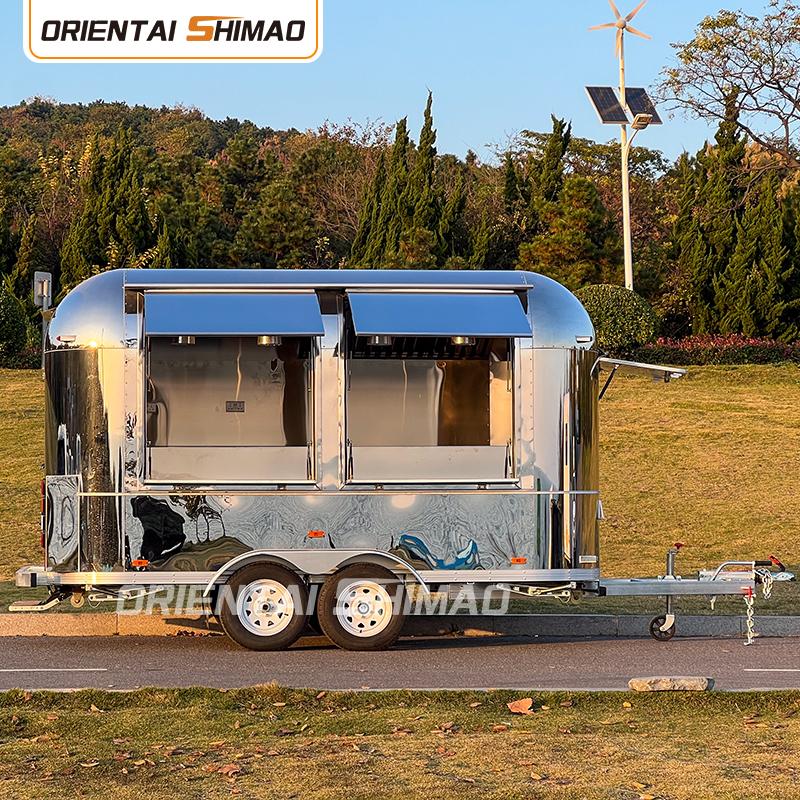
Most kitchens stay put. Yours shouldn't have to. Oriental Shimao crafts custom food trailers that don't just carry equipment—they carry a vision. Every propane line, counter corner, and service window is tailored to how you actually cook and serve, so your culinary dreams can hit the streets without compromise. Here's what to expect when you choose a build that's as unique as your menu.
From Napkin Sketch to Rolling Kitchen: How We Build Your Vision
Every build starts with the same thing: a rough idea scratched onto whatever was nearby—a napkin, the back of an envelope, a page torn from a notebook. That sketch might be three wobbly rectangles and a squiggle for a service window. We don’t need more than that. We sit down with you, ask how you actually cook, how you move in tight spaces, where you need reach-in coolers versus dry storage. Then we translate those pencil lines into a working floor plan.
From there, the real shift happens in fabrication. We cut, weld, and fit every rail, hinge, and fire-suppression line to match your menu, not the other way around. A taco cart doesn’t need the same hood depth as a burger trailer, and a coffee van shouldn’t carry the weight of a six-burner range. We sweat details like drain placement, generator access, and counter height for someone who will stand in there for ten hours straight. The result isn’t a generic shell with your logo slapped on—it’s a kitchen that happens to roll on wheels.
Before it leaves the shop, we run it. Water flows, fryers fire, lights stay steady under load. You don’t get handed keys and a wish. You get a build sheet, a walkthrough of every system, and a rig that’s ready for its first health inspection. The napkin sketch ends up framed in your truck—because that’s where the vision started, and this is where it lives.
Built for the Bumps: Why Road-Ready Frames Matter More Than You Think
Most people assume any sturdy-looking frame can handle a bit of rough pavement, but there's a real difference between something that survives a pothole and something that's genuinely designed for it. Road-ready frames aren't just about thicker tubing or heavier welds—they're built with a specific flex pattern that absorbs impact without transferring every jolt straight to your spine. Think of it like the difference between driving a stiff suspension on a washboard road versus a tuned one: the stiff one gets you there, but you feel every crack. A frame engineered for bumps uses geometry, material choice, and joint design to spread stress evenly, so a sudden edge doesn't become a stress riser that eventually leads to cracks or fatigue failure.
The reality is that most urban and mixed-terrain riding involves constant micro-impacts: broken pavement, railroad crossings, dropped curbs, gravel patches, even those sneaky tree roots under the asphalt. A frame that's too rigid might feel fast on smooth tarmac, but over time those vibrations wear you down and can even cause numbness in your hands or lower back. Road-ready frames often use a combination of butted tubing, slightly relaxed head angles, and wider tire clearance to let the tires and frame work together as a suspension system. You don't need a full suspension bike for rough roads—you need a frame that doesn't fight the road, but rather dances over it. That means less fatigue, more control, and a ride that stays comfortable hour after hour.
Beyond comfort, there's a reliability angle that rarely gets mentioned. A frame tuned for rough surfaces tends to have reinforced high-stress zones—around the bottom bracket, seat cluster, and head tube—while staying lighter elsewhere. This targeted strength means it can take repeated impacts without developing hairline cracks that go unnoticed until a catastrophic failure. For commuters, gravel riders, or anyone who just doesn't want to baby their bike, that translates into fewer surprise repairs and a longer service life. So when a frame is described as "road-ready," it's not marketing fluff—it's a signal that someone thought about how the bike actually gets used, not just how it looks in a studio photo.
Layouts That Let Your Crew Move Like a Pit Stop Team
A pit crew doesn't waste a single step, and your space shouldn't either. Start by mapping the sequence of tasks your team repeats most often, then arrange stations so each handoff happens within arm's reach. Place shared tools and ingredients at the intersection of the busiest paths, not against a far wall. If someone has to turn around or cross the room mid-task, that's a signal to re-think the flow.
Give every role its own wedge of counter or floor space, even if it's just a marked zone. When prep, cooking, and plating overlap, narrow lanes force people to dodge each other. Instead, keep a clear through-line from raw materials to finished dishes, with staging shelves at knee-to-shoulder height so no one bends or reaches excessively. The goal is rhythm: hands move, feet stay planted.
Finally, treat cleanup and restocking as part of the layout, not an afterthought. A small caddy for spent tools, a drop zone for dirty pans, and a refill station near the pass can keep the line moving without shouting. When the space itself cues the next action, your crew starts working like a team that's rehearsed the stopwatch.
Power, Plumbing, and Propane: The Hidden Guts of a Great Trailer
Most people only notice the floor plan or the exterior paint, but the real difference between a trailer that works and one that constantly fights you lives behind the cabinets and underneath the chassis. Power, plumbing, and propane form a quiet circulatory system. When they’re designed well, you forget they exist. When they’re not, every trip turns into a slow-motion troubleshooting session.
A well-thought-out electrical setup is more than just a converter and a few outlets. You want accessible breaker panels, clearly labeled circuits, and wiring routes that don’t chafe against sharp metal. Look for a shore power inlet that’s easy to reach but protected from weather, and if you plan to boondock, check how the solar charge controller and battery monitor are mounted. Heat and poor connections are the usual culprits, so a clean, ventilated compartment beats a rats’ nest of wire every time.
Plumbing and propane are where neglect gets expensive. PEX lines with brass fittings hold up far better than cheap vinyl hose, and a freshwater tank with a large inspection port makes sanitizing simple instead of a wrestling match. Drain valves should angle slightly outward so you’re not lying in mud to reach them. On the propane side, a sealed, properly vented locker with a two-stage regulator and an accessible emergency shutoff isn’t just convenient—it’s the difference between a controlled flame and a bad day. The best trailers make these systems obvious and serviceable, because every component will eventually need attention.
Codes, Permits, and Nightmares Avoided: Navigating the Paperwork
Most people assume the hard part of any project is swinging the hammer or pulling wire. It isn't. The real test is whether your local building department decides your plans deserve a stamp. Codes mutate every few years, inspectors interpret them differently, and one missing permit can turn a weekend job into a six-month legal headache. The trick isn't just reading the codebook—it's knowing which parts the inspector actually enforces, and which parts the clerk will wave through with a tired nod.
Start by pulling records before you touch anything. Ask what's already on file for your property. Often, previous owners did unpermitted work, and you inherit that liability the moment you start your own renovation. The building department may not care about a twenty-year-old deck, but if you open the wall next to it and expose the wiring, suddenly everything must be brought up to today's code. Get that in writing before you pay for the permit.
Permit fees, plan reviews, and resubmission charges bleed budgets slowly. One client of mine spent more on three rounds of plan rejections than on the actual lumber for a simple bathroom. The fix? Schedule a pre-submittal meeting. Most departments offer them free. Bring rough sketches, ask what they flag most often, and write down names. Inspectors are far easier on people who show up early and ask dumb questions than on contractors who argue from the muddy job site.
Your Name in Neon: Making the Trailer a Magnet on the Curb
Most curbside trailers rely on a vinyl banner to announce themselves. A neon sign does something entirely different. It gives your name a pulse. The glow reads as intentional, even a little mischievous, and it pulls the eye away from the noise of traffic and phone screens. When a hungry passerby sees your name buzzing softly above the order window, the trailer stops looking like a vehicle and starts feeling like a place that knows what it's doing.
Placement matters more than size. Mount the sign on the street-facing side, slightly above eye level, so the light hits people before they're close enough to read the menu. If your trailer runs into the evening, dimmable neon or a warm white tone keeps the curb from feeling cluttered. You want the name to act like a quiet host—visible from the crosswalk, legible from the passenger seat, and distinct enough that someone remembers it after they've walked past.
The real payoff shows up in small moments. A couple crossing the street pauses because the color catches the wet asphalt. A driver circles back after seeing the sign in the side mirror. None of that happens with a static decal. Neon gives your trailer a sense of arrival before the first order is ever taken, and in a city full of food stops, that small glow turns a parked trailer into a curb magnet rather than just another vehicle.
FAQ
We build each trailer around your specific menu and workflow, not the other way around. That means the cooking line, storage, and service window are positioned to match how you actually move during a rush. Materials like marine-grade aluminum and stainless steel keep things lightweight but durable, and the finish is hand-finished, so no two trailers look identical.
Absolutely. If you're doing wood-fired pizza, we'll reinforce the floor for a stone oven and add the right hood and ventilation. For ice cream, we focus on insulation, dedicated freezer circuits, and a lower service window. We've built everything from taco trucks with flat-top griddles to coffee trailers with full espresso setups.
Most builds run between six and ten weeks. Simpler layouts with standard equipment can be closer to six, while heavily customized interiors or custom exterior paint might push toward ten. We lock the design first, then order materials, so you're not waiting on parts mid-build.
You can spec almost any commercial kitchen piece that fits code: fryers, charbroilers, refrigerated prep tables, sandwich units, steam tables, hand sinks, three-compartment sinks, ventilation hoods, and onboard generators. We also do custom stainless counters and shelving to maximize every inch.
We provide detailed drawings and spec sheets that most health departments and permit offices ask for, but we don't file the paperwork for you since local rules vary widely. Your drawings will clearly show sink placement, ventilation, and equipment clearances, which usually speeds up the approval process.
Yes, we regularly set up dual-fuel systems so you can run propane for cooking and electric for refrigeration or lighting. It gives you the option to plug in at a commissary or event with shore power, or run off a generator when no hookup is available.
The exterior is basically your moving billboard. We offer custom automotive paint, vinyl wraps, LED menu boards, awnings, serving window graphics, and even chaser lights if you want a retro feel. You can send us your logo and brand colors, and we'll mock up the layout before any paint is sprayed.
We don't handle loans in-house, but we work with a few equipment financing partners who understand food trailers. Many customers also use SBA microloans or local small business grants. We can give you a detailed quote and build schedule to include in your loan application.
Conclusion
Turning a rough sketch into a fully rigged food trailer is less about welding metal and more about listening. We start with your napkin drawing—awkward lines, grease stains and all—and translate that into a working kitchen that rolls. But a pretty shell won't survive its first pothole, so we obsess over road-ready frames. Every crossmember, axle, and weld gets treated like it's hauling your reputation, because it is. Then comes the interior choreography. We map out a layout where your cook can pivot from grill to garnish without bumping elbows, and your cashier can hand out orders without playing Twister around the fridge. That flow isn't a luxury; it's what keeps ticket times down and tempers cool during a Friday rush.
Behind the stainless steel, the real unsung heroes are the systems nobody sees: power that won't brown out your flat-top, plumbing that drains without drama, and propane lines that don't flirt with disaster. We sweat those details so you don't have to. And before you ever flip the "open" sign, we help you dodge the paperwork gauntlet—health codes, fire permits, local zoning quirks. A trailer that can't legally park is just an expensive driveway ornament. Finally, we make sure your name burns bright at the curb. Bold signage, smart lighting, a color scheme that stops foot traffic—because your food deserves an introduction that's just as bold as the first bite.
Contact Us
Contact Person: Jack Wang
Email: [email protected]
Tel/WhatsApp: 8618306483516
Website: https://www.orientalshimaofoodtruck.com